دورات تدريبة في العراق

What do you know about the course (credit-hour) system adopted by the Ministry of Higher Education and Scientific Research in Iraq?

The Department of Planning and Follow-up at the Ministry of Higher Education and Scientific Research has published a comprehensive guide outlining the regulations and instructions for defining the course system and the mechanisms for implementing it.

According to the guide, the Ministry defines the course system as a globally recognized educational system for delivering academic programs. Study is based on credit hours, rather than a fixed annual or traditional semester system.

This system gives students the flexibility to choose the courses they wish to study each semester. It offers several advantages, including:

1. Developing the student’s personality
It enhances students’ independence by training them to select their courses from a range of available options, allowing them to shape their academic path according to their abilities and capabilities.

2. Opportunity to improve academic performance
Students are given the opportunity to retake courses in which they did not achieve a passing grade or received a low score, enabling them to improve their GPA. They may also choose alternative elective courses.

3. Flexibility in study duration
The system accommodates different student circumstances. Some students may prefer to complete their studies in a shorter time without compromising educational quality, while others—such as working students or those facing challenges—may extend their study period.

4. Better alignment with the labor market
It helps in preparing graduates for suitable job roles based on their academic achievements and the needs of the job market they aim to enter.

5. Efficient use of resources
The course system allows better utilization of human and material resources throughout the academic year.

For full details, the official guide can be downloaded from the Ministry’s resources.

عرم حسين سلمان

Making a Case for Enhanced Big Data, and AI Investments in Iraq

Iraq’s Vision for Sustainable Development 2030 envisions, among other objectives, increasing oil sector efficiency and creating job opportunities. The country also seeks to diversify its economy from reliance on oil revenues by developing new industries and modernizing its agriculture sector.

ITU figures reveal that more than 60% of the population has internet access, and out of around 40 million, some 37.5 million people have a mobile phone subscription. This reveals a nation with the digital foundation to leap into cutting-edge technology such as AI, cloud computing, and Big Data. To become an advanced regional data hub, Iraq can also leverage its advantageous geographic location — at the crossroads of high-growth regions in global data connectivity terms.   

Data is at the heart of modern ICT development, which is key to modern economic and national development. Analyzing this data offers insights that help resource management, economic productivity, healthcare provision, and natural disaster prediction and management, to name a few.

Globally, the big data analytics market will reach $103 billion by 2023, with 97.2% of organizations saying they are investing in big data and AI. Huawei figures suggest data creation will grow to more than 180 zettabytes by 2025 and the need for data storage will grow at 19.2% annually up to 2025.

Data analysis is an illustration of a mature ICT sector – one that can embrace the global move towards digitization. However, managing the massive volume of data generated by the typical enterprise is beyond human capabilities. Artificial intelligence-driven algorithms are ideal for handling big data analysis. With data such a critical asset for enterprises, using AI-driven systems to analyze and process data and then make appropriate data-driven decisions improves production efficiency and intelligence. By 2025, an estimated 86% of global enterprises will use AI, Huawei estimates. 

In Iraq, remaining competitive in the global energy sector means urgently addressing the need to embrace Big Data analytics driven by AI. For example, rapid, efficient data analysis can proactively pinpoint potential failure in oil infrastructure before a breakdown, saving on maintenance costs. Meanwhile, AI-driven seismic analysis makes identifying oil fields more effective and accurate, while production targets can be met with proficiency thanks to data analysis.

However, the world faces an acute shortage of qualified data analysts, who are now in demand in numerous sectors, not just in ICT. Research firm Korn Ferry estimates there will be a global shortage of more than 85.2 million skilled people by 2030, a shortfall that could result in $8.452 trillion in unrealized annual revenue by 2030—equivalent to the combined GDP of Germany and Japan.

To meet the current and future demand for skilled AI professionals, our youth must be encouraged into ICT careers, especially in advanced technologies. Universities cannot do it alone. Collaboration with the private sector has emerged as a powerful model for skills enhancement.

Companies such as Huawei are major supporters of skills development initiatives in Iraq. Huawei in particular has partnered with several educational authorities, universities, educational institutions, and others to set talent standards, build alliances, and demonstrate the value of talent. Their global and regional initiatives designed to nurture future ICT leaders, including the Seeds for the Future program, Huawei ICT Academy, and the annual Huawei ICT Competition, have garnered significant interest in Iraq. Thanks to such initiatives, Iraq is on a firmer footing to boldly embrace the future. Iraq’s Prime Minister Mustafa al-Kadhimi in 2020 underlined his government’s commitment to developing AI capabilities and supporting related scientific research. Focusing on building a world-class talent pool of data analysts will ultimately help Iraq develop its economy, attract new investments, and produce digital talent for Iraq and beyond.


التحول الرقمي

Digital Transformation Adds Value to Every Customer Interaction.

This article highlights the importance of digital transformation.

Digital transformation is changing the way business gets done and, in some cases, creating entirely new classes of businesses. With digital transformation, companies are taking a step back and revisiting everything they do, from internal systems to customer interactions both online and in person. They’re asking big questions like “Can we change our processes in a way that will enable better decision-making, game-changing efficiencies, or a better customer experience with more personalization?”

Now we’re firmly entrenched in the digital age, and businesses of all sorts are creating clever, effective, and disruptive ways of leveraging technology. Netflix is a great example. It started out as a mail-order service and disrupted the brick-and-mortar video rental business.

Digital innovations made the wide-scale streaming video possible. Today, Netflix takes on traditional broadcast and cable television networks and production studios all at once by offering a growing library of on-demand content at ultracompetitive prices.

Digitization gave Netflix the ability not only to stream video content directly to customers but also to gain unprecedented insight into viewing habits and preferences. It uses that data to inform everything from the design of its user experience to the development of first-run shows and movies at in-house studios. That’s digital transformation in action: taking advantage of available technologies to inform how a business runs

التحول الرقمي

What Is Digital Transformation?

Digital transformation is the process of using digital technologies to create new — or modify existing — business processes, culture, and customer experiences to meet changing business and market requirements. This reimagining of business in the digital age is digital transformation.

It transcends traditional roles like sales, marketing, and customer service. Instead, digital transformation begins and ends with how you think about, and engage with, customers.  As we move from paper to spreadsheets to smart applications for managing our business, we have the chance to reimagine how we do business — how we engage our customers — with digital technology on our side.

One innovation leads to another; new technology leads to process improvements which lead to better products and services. 

Redhat Company

For small businesses just getting started, there’s no need to set up your business processes and transform them later. You can future-proof your organization from the word go. Building a 21st-century business on stickies and handwritten ledgers just isn’t sustainable. Thinking, planning and building digitally sets you up to be agile, flexible, and ready to grow.

Digital Transformation is a goal to build a technical and operational foundation, to evolve and respond in the best possible way to unpredictable and ever-changing customer expectations, market conditions, and local or global events.

IBM Company

المنصة الانتخابية

Voters Web Application System

To enhance electoral awareness and promote transparency, we offer our educational platform for monitoring the electoral process.

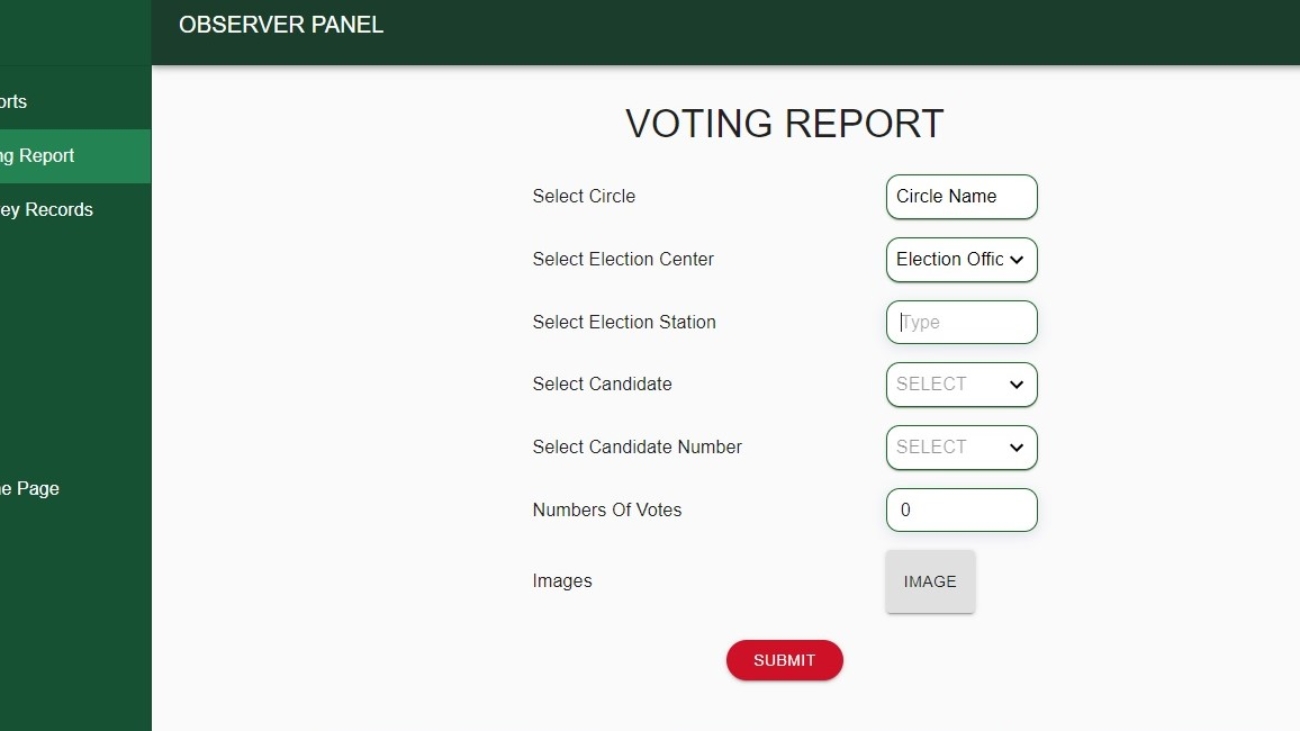
This platform enables the Independent High Electoral Commission, along with all relevant institutions, to track voting performance on election day and obtain the number of votes and their totals at each polling station and electoral center.

Voting results from all polling stations are collected within seconds. Each electoral district, city, or polling center receives detailed vote counts categorized by lists and candidates through our dedicated platform. This platform operates using the latest technologies, particularly artificial intelligence and cloud computing.

We enable the Independent High Electoral Commission from collecting the votes from all election branches in real-time mode. Also, our platform operates to increase election awareness by advertising the election procedure and regulations.